
Черная сторона очарования русской голубой
Черная сторона очарования русской голубой
Что вы думаете о русских кошках в чёрном окрасе? Большинство людей знают русскую голубую, но не все знают, что эта же порода бывает ещё и в чёрном и белом окрасах. В Финляндии русские чёрные встречаются исключительно в нашем питомнике. Это полноценные породистые кошки, полностью идентичные классическим «голубым» — за исключением одного единственного гена разбавления окраса (dilution gene).
Тайна окраса
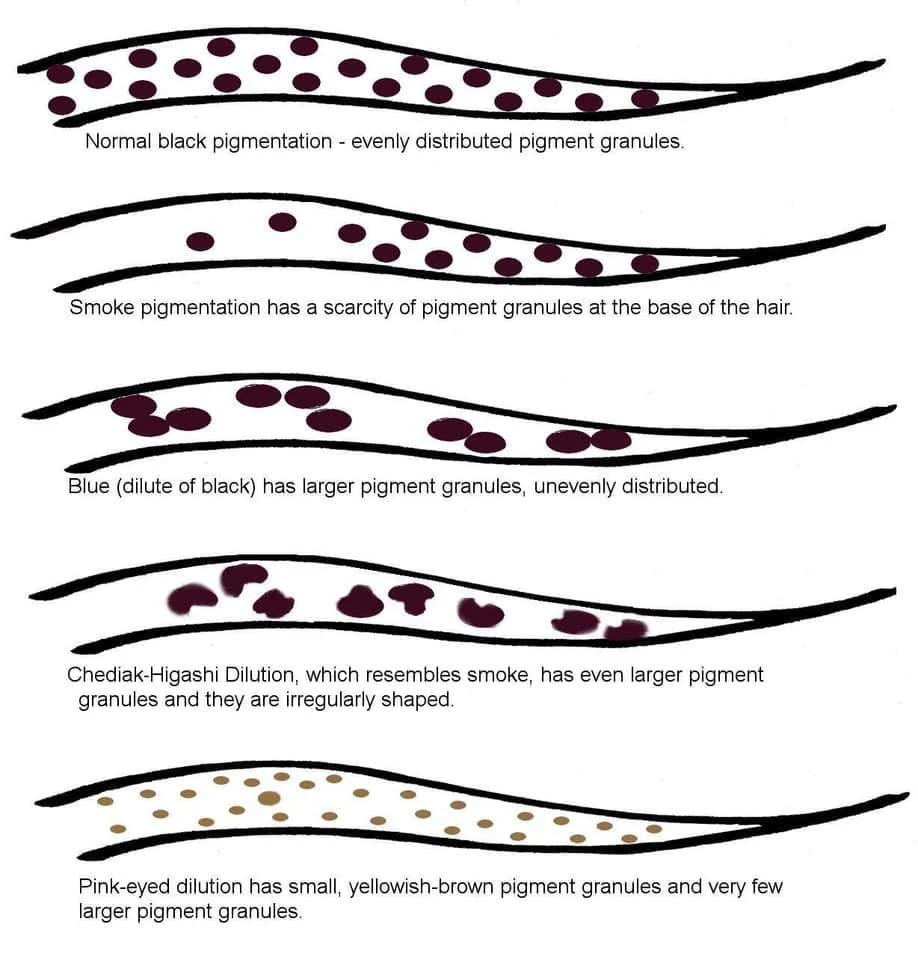
Легендарное серебристое сияние шерсти русской голубой создаётся рецессивным геном разбавления (d), который влияет на то, как гранулы пигмента распределяются внутри каждого волоса. У чёрного окраса пигментные гранулы отделены друг от друга и равномерно распределены, придавая шерсти насыщенный глянцевый цвет. Ген разбавления же заставляет гранулы слипаться и распределяться неравномерно, из-за чего цвет выглядит светлее, а шерсть приобретает мягкий голубой оттенок. Это хорошо иллюстрирует упрощенная схема гранул пигмента в кошачьей шерсти — на основе фотографий, полученных в ходе микроскопического исследования (источник).
Генетически это выглядит так:
- DD или Dd → чёрный окрас (полный цвет)
- dd→ голубой окрас (разбавленный чёрный).
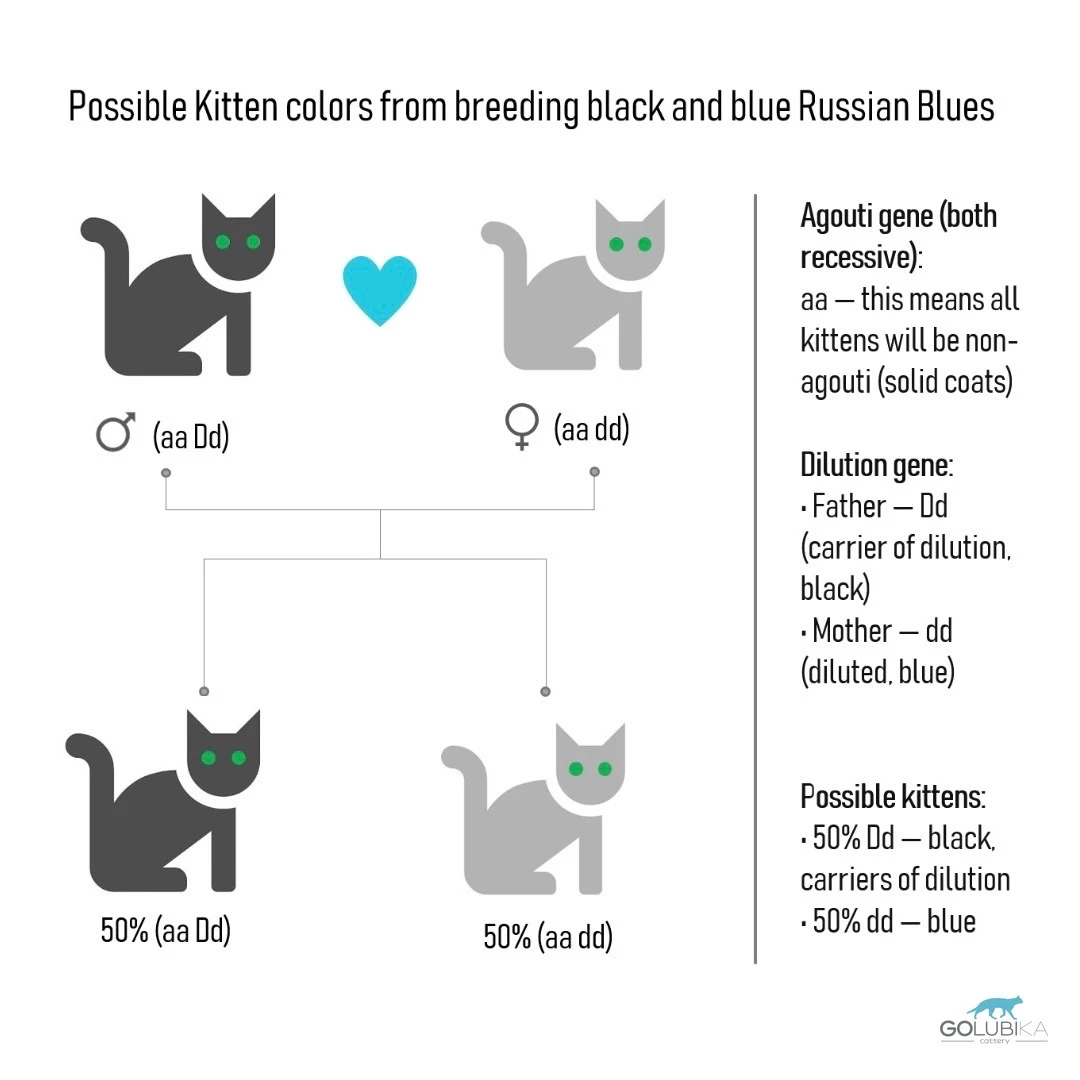
Если русская черная является гетерозиготной по разбавлению (Dd), то в паре с голубой кошкой (dd) вероятность рождения голубых котят составит 50%.
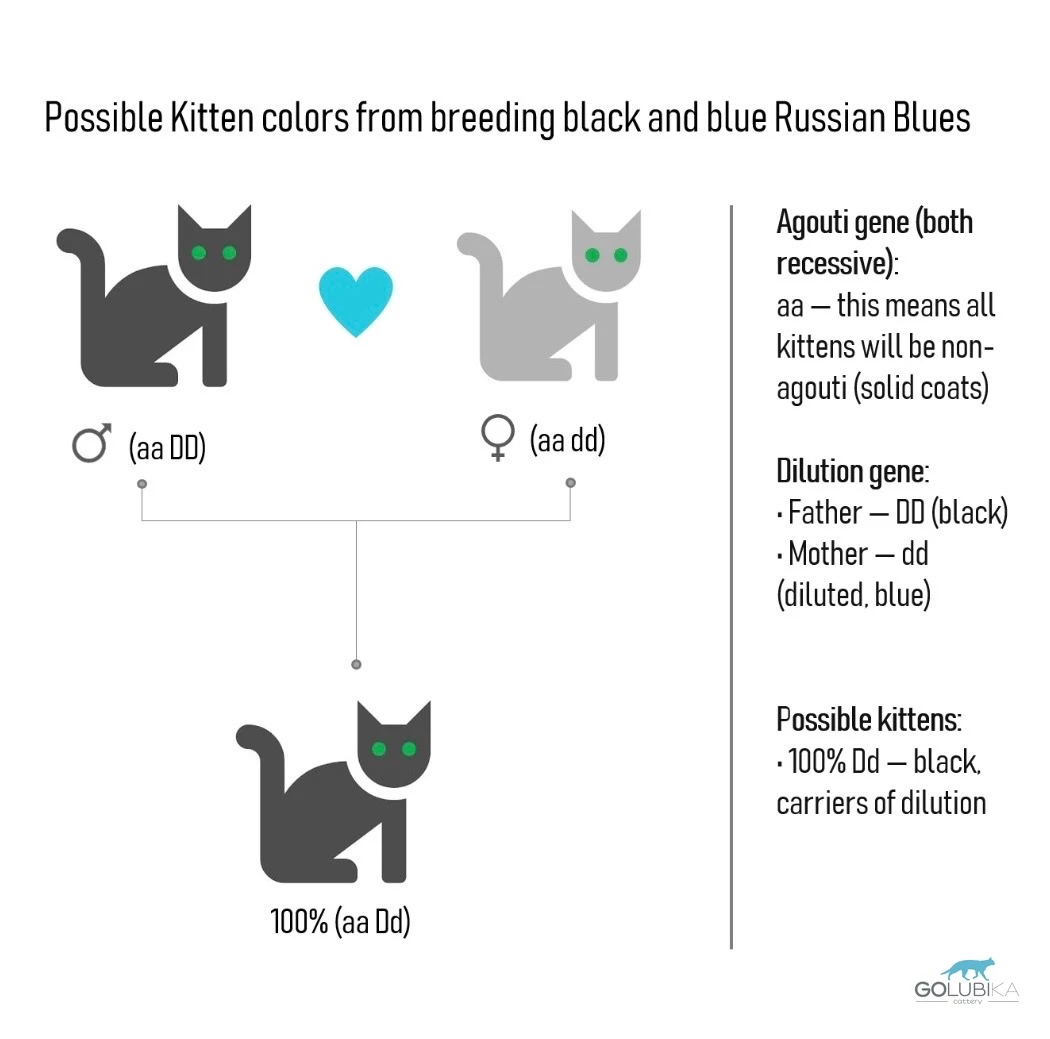
Если же русская черная является гомозиготной по разбавлению (DD), то в паре с голубой кошкой (dd) все котята будут черные и гетерозиготные по разбавлению (Dd).
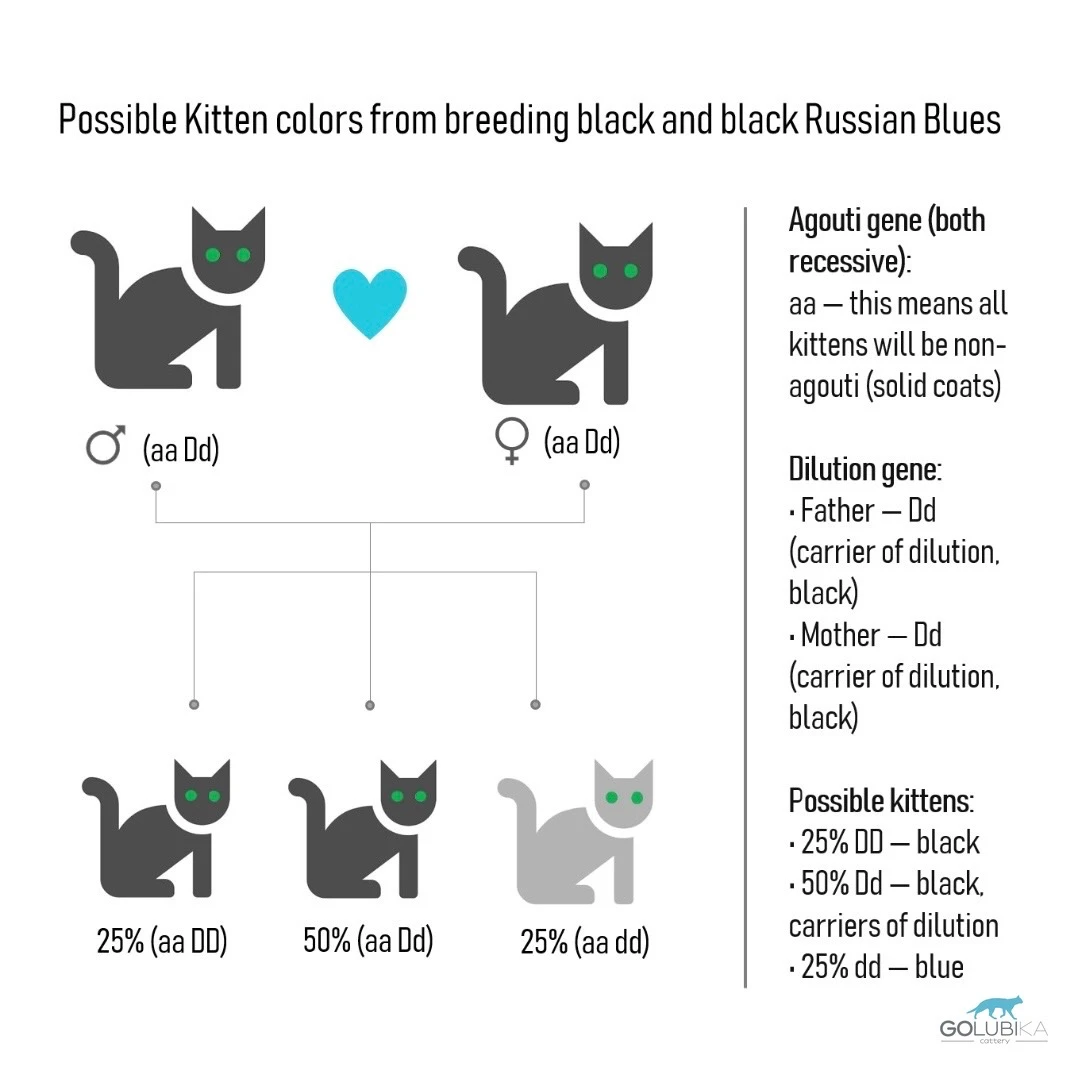
Могут ли две русские черные дать голубых котят? Ответ — да, если обе кошки гетерозиготны по разбавлению (Dd), то есть несут скрытый ген d. Вероятность рождения голубых котят (dd) составит 25%.
Полигенный фон окраса русской голубой
Голубой окрас русской голубой — это не просто разбавленный чёрный (aa B- dd). Его характерный холодный тон и мягкое серебрение формируются породоспецифическим полигенным фоном, влияющим на структуру шерсти и распределение пигмента по длине волоса, включая осветлённые кончики.
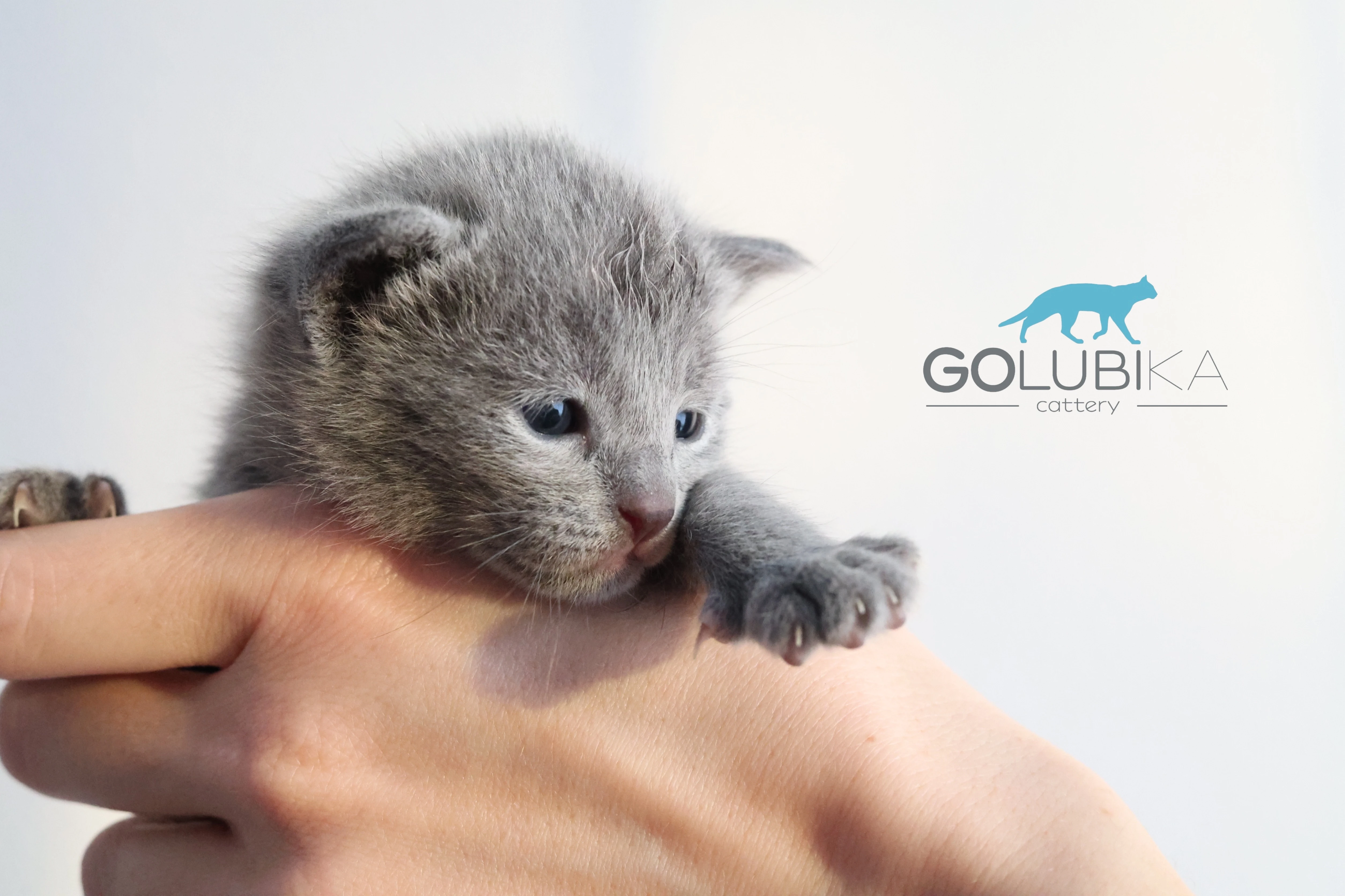
Этот же полигенный комплекс присутствует и у чёрных русских голубых (Russian Black), но без гена разбавления он менее заметен. Именно поэтому при использовании чёрных русских голубых в разведении с голубыми рождаются не просто «голубые», а настоящие русские голубые котята с правильным серебристо-голубым цветом и качеством шерсти.
Признание в европейских фелинологических системах
Русская порода официально признана в трёх окрасах сразу несколькими европейскими и международными фелинологическими федерациями:
- WCF – Russian Blue (RUS): голубой (a), чёрный (n), белый (w)
- LOOF – признаёт те же три окраса
- GCCF – использует простое название “Russian”: Russian Blue, Russian Black, Russian White
- FIFe – официально регистрирует только голубой окрас, но обсуждается расширение стандарта
- TICA, CFA – североамериканские системы, активно работающие в Европе, признают только голубой вариант
По правилам WCF, мы формально говорим «русская голубая в чёрном окрасе», что часто вызывает вопросы. А вот терминология GCCF звучит естественнее — русская голубая, русская чёрная, русская белая, подчёркивая, что все три цвета принадлежат одной элегантной породе.
Очарование русской чёрной
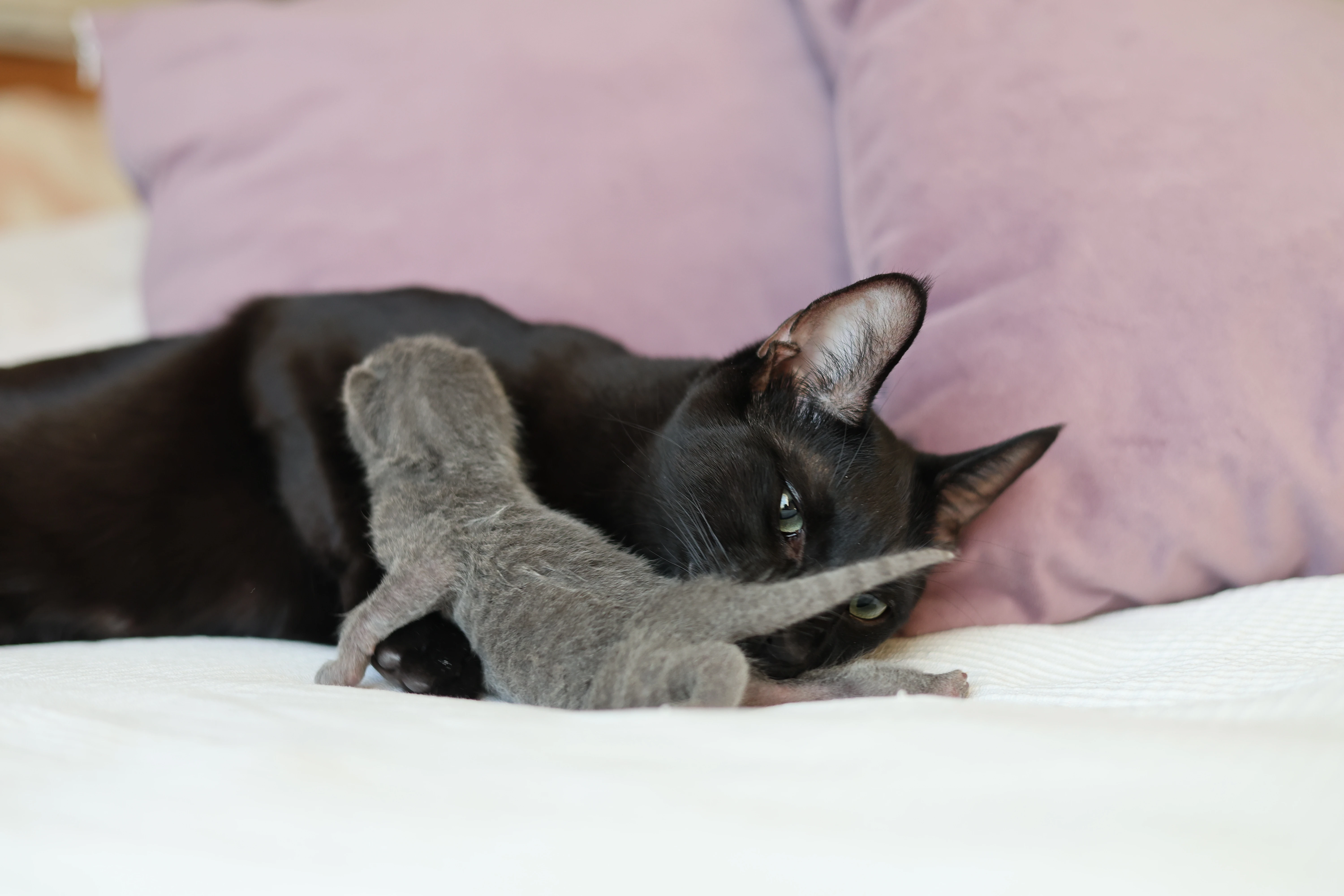
Русские чёрные кошки — это всё то, за что мы ценим «русскую» породу: стройное, аккуратное тело, плотная двойная шерсть, выразительные зелёные глаза и спокойный, умный характер. Разница только в окрасе — шерсть иссиня-чёрная с блеском — мини-пантера в домашнем формате.
Русская чёрная встречается нечасто, поэтому многие впервые узнают о ней именно у заводчиков русской голубой. Для нас это близкая и очень любимая часть «русской семьи» — тихая, элегантная и невероятно красивая.