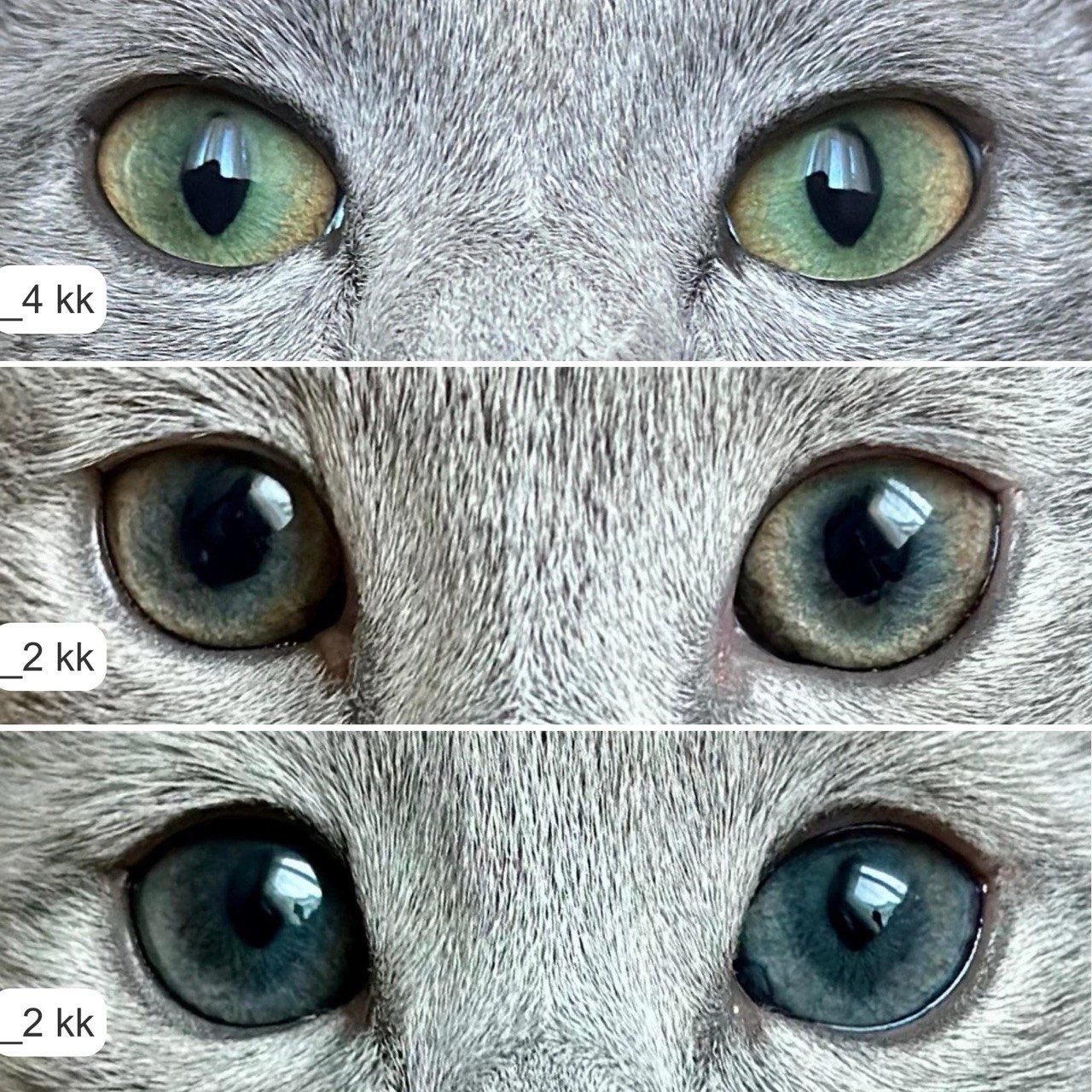
Как развивается зеленый цвет глаз у русской голубой кошки?
Как развивается зелёный цвет глаз у русской голубой кошки
Текст: Елена Акуленко / Питомник Golubika
Русская голубая кошка известна своим элегантным внешним видом, шелковистой серебристой шерстью и, конечно, выразительными зелёными глазами. Однако мало кто знает, что этот чарующий взгляд — результат длительного процесса развития, на который влияет множество биологических факторов. В этой статье я поделюсь своими наблюдениями о том, как формируется цвет глаз, какие факторы влияют на его оттенок и сколько времени занимает этот процесс.
Глаза новорожденного котёнка: всё начинается с голубого
Как и у большинства кошек, у котят русской голубой породы глаза при рождении голубые. Причина в том, что на раннем этапе в радужке ещё нет значительного количества пигмента, и свет рассеивается во внешнем слое радужки — строме, придавая глазам синеватый оттенок. Формирование пигмента начинается ещё в утробе, но его распределение и окончательное развитие цвета продолжаются после рождения — и у русской голубой этот процесс может занимать до двух лет.
Как устроена радужка
Радужка состоит из двух основных слоёв: наружной стромы и более глубокого пигментного эпителия. Пигмент может присутствовать в обоих слоях, но в разном количестве и на разных стадиях развития. Важно понимать, что в природе не существует “зелёного” пигмента. То, что мы видим глаза как зелёные, — это оптический эффект, возникающий из-за взаимодействия различных пигментов и структуры радужки.
Основные пигменты, влияющие на цвет глаз:
- Эумеланин — от светло-коричневого до почти чёрного.
- Феомеланин — от жёлтых до красноватых оттенков.
- Липофусцин — даёт золотистые и медные оттенки.
Распределение этих пигментов в слоях радужки создаёт широкий и разнообразный спектр цвета глаз у кошек.
От голубого к зелёному: как происходит изменение?
Синий оттенок возникает за счёт отражения света от тыльной (тёмной) поверхности радужки, когда в переднем слое ещё мало пигмента. По мере взросления кошки в строме начинает накапливаться жёлтый пигмент, и в сочетании с рассеянным синим светом это создаёт визуальный эффект зелёного цвета.
- Если жёлтого пигмента немного, глаза выглядят как изумрудно-зелёные или бирюзовые.
- При большем количестве пигмента оттенок становится желтовато-зелёным.
Что влияет на яркость и глубину цвета?
Оттенок глаз у русской голубой кошки может варьироваться от светло-зелёного до насыщенного ярко-зелёного. Это зависит от:
- Равномерности распределения пигмента — чем оно равномернее, тем чище цвет.
- Глубины залегания пигмента в радужке — чем глубже, тем насыщеннее зелёный.
- Общего количества пигмента — большое количество может придавать оттенок золотисто-зелёного, а при нехватке пигмента сохраняется синеватость.
У некоторых кошек в радужке можно увидеть кольцевые зоны разных оттенков — это типично для котят, но иногда сохраняется и у взрослых кошек.
Влияет ли форма глаза на восприятие цвета?
Интересный факт: форма глаза тоже может влиять на восприятие цвета. Более выпуклые глаза усиливают рассеяние света, и оттенки могут казаться ярче или меняться в зависимости от того, под каким углом вы смотрите на них.
В заключение
Формирование зелёного цвета глаз у русской голубой кошки — это тонкий и длительный процесс, отражающий сложную работу организма. Он зависит от генетики, анатомии и биохимических процессов. Наблюдать за изменением цвета глаз от котёнка до взрослой кошки — настоящее удовольствие, которое позволяет увидеть уникальность каждой кошки этой великолепной породы.
(См. также обложку статьи, на которой показаны различные оттенки глаз котят в возрасте 2-х и 4-х месяцев.)